
Why Interior Design Is Interesting: 6 Reasons to Try It
Last updated: October 01, 2026
Your room can look finished and still feel wrong. The sofa may block movement, the lighting may feel flat, or the colors may not work together. Interior design solves these everyday problems and gives you space to show your style. This guide gives you six reasons the topic stays interesting, plus simple tips you can test this weekend without a major renovation.
Things that make your room interior design intresting?
Interior design is interesting because it blends art, science, and daily life in one place. Every choice, from paint color to chair height, changes how a room looks and works. You see the result fast, and you live inside it every day. Few hobbies give you that kind of feedback.
This guide speaks to one reader: a first-time renter or new homeowner with one free weekend and a modest budget. Professional designers work with larger budgets and longer timelines, so the steps here stay simple and low risk.
Our approach: We focus on practical changes that renters and homeowners can test without a major renovation. We put room function, lighting, movement, comfort, and budget ahead of decorative trends.
6 Reasons Interior Design Stays Interesting
1. Creativity is mixed With Problem Solving
A good room looks nice, and it also works. A designer asks where people will sit, where light falls, and where the clutter will land. Then the designer picks colors and shapes that answer those questions. You use your imagination and your logic at the same time, which keeps the process fresh.
2. Small Changes, big impacts
A new lamp can change an entire corner. A fresh coat of paint can make a dark hallway feel open. Because you see the payoff within hours, you stay motivated. That fast feedback explains why so many people move from one small project to the next.
3. Your Experience is Affected by Light, Color and Space
Most people notice that a warm bulb makes an evening room feel cozy, while a bright cool bulb helps at a desk. Color also changes a room, but reactions vary from person to person. Some people find soft blues restful, while others find them cold. Test any color in your own room, in your own light, before you commit.
4. Every Home Has Its Own Story
Two people can start with the same empty apartment and finish with completely different homes. One person shows travel finds on open shelves. Another person builds a reading nook with family photos. Your space reflects your habits, memories, and values, so no two projects look alike.
5. Step by Step Learning Guide
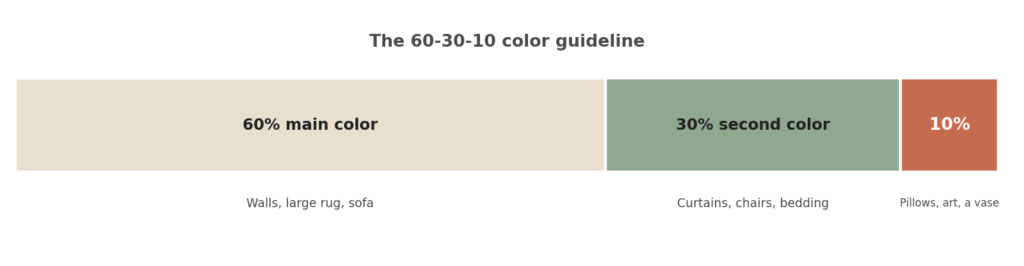
Design has simple guidelines that anyone can practice. The 60-30-10 guideline, for example, suggests one main color for about 60 percent of a room, a second color for about 30 percent, and an accent color for about 10 percent. Many designers use it as a starting point, not a strict law. A few guidelines like this build confidence fast.
6. Bugdet Has No Sserious Impact On Design
You do not need a big budget to enjoy this craft. Rearranging furniture costs nothing. Paint, new hardware, and better lighting usually cost less than new furniture. Many people also mix secondhand finds with a few new pieces, which adds character and saves money.
A Simple Living Room Example
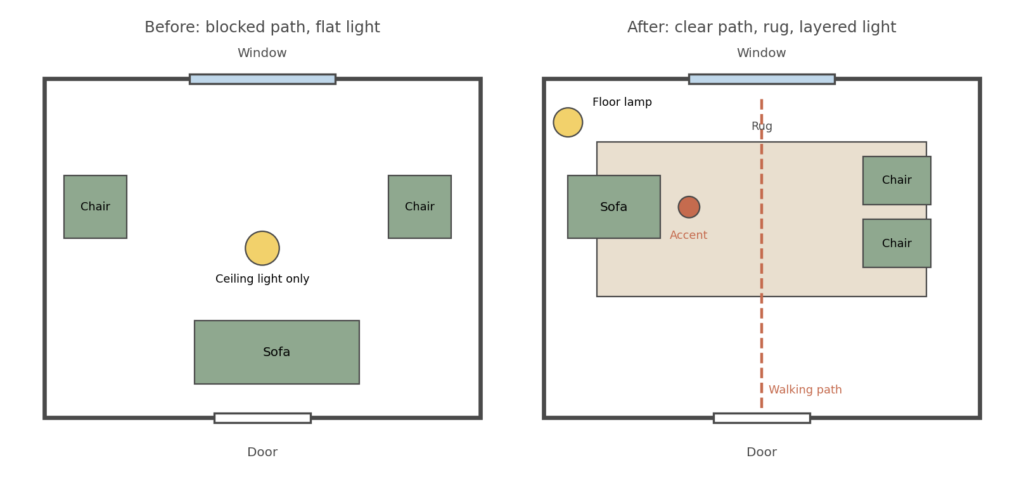
Imagine a small living room with one sofa, two chairs, and a ceiling light. The furniture looks nice, but the room still feels disconnected. Start with a clear walking path from the door to the window. Next, slide a rug under the front legs of the seating. Then add a floor lamp beside the sofa. Finally, repeat one accent color in a pillow and a piece of art. The furniture stays the same, yet the room feels planned.
Try the Two-Photo Test
Before you change anything, take one photo of your room at midday and another at night. Put them side by side. Notice where the room looks flat, dark, or crowded. You see this room every day, so your eyes skip its problems. A photo does not skip them. This quick test shows lighting and layout issues in about two minutes.
Practical Interior Design Tips for This Weekend
Start with these five steps. Each one takes a few hours at most.
Measure before you buy. Write down the width and length of your room, and measure every doorway on the delivery path. A sofa can fit the room and still fail at the entrance.
Test the layout with painter’s tape. Mark the size of a new piece on the floor and live with the outline for two days. If you keep bumping into it, the piece does not belong there.
Check paint samples near both a window and a lamp. Daylight and evening bulbs can change the same color a lot.
Layer your lighting. Combine one overhead light with a lamp or two at different heights. This mix makes a room feel warm and gives you the right glow for each activity.
Leave room to move. Keep clear paths between doors, seating, and windows. If you must turn sideways to walk through, remove one piece.
Simple Interior Decoration Tips
People often mix up design and decoration. Interior design plans the space itself, including layout, lighting, and how the room works. Interior decoration adds the surface layer, such as paint, art, pillows, and plants. A room needs both to feel finished.
Try grouping decor in odd numbers, such as three candles or five frames. Many designers use this approach because it can create a more relaxed arrangement. Repeat one color at least three times around the room so the eye travels. Hang art with its center near eye level, not up by the ceiling. Finally, edit your shelves. Remove a few items and give the rest room to breathe.
The 10-Minute Room Review Checklist
Save this table on your phone. Walk into any room, spend ten minutes, and answer each question.
| Area | Question | Quick Fix |
| Lighting | Does the room have more than one light source? | Add a lamp at another height. |
| Layout | Can you walk around easily? | Move or remove one large item. |
| Color | Can you identify your main colors? | Add a missing accent tone. |
| Focus | Where does your eye go first? | Remove clutter from that area. |
| Comfort | Does each seat have a nearby surface? | Add a small side table. |
| Personality | Does something tell your story? | Display a photo or keepsake. |
Common Mistakes to Avoid
Beginners often buy first and plan later. Others match every item, which makes a room feel flat. A third mistake is hanging art too high, which leaves it floating away from the furniture. Fix these three habits and your rooms improve quickly.
Learn More From Trusted Sources
If you want a deeper look at the profession, the American Society of Interior Designers explains what interior designers do and how to work with one.
Frequently Asked Questions
Why is interior design interesting?
Interior design is interesting because it combines creativity, practical thinking, and personal expression. You change a space, see the result quickly, and enjoy it every day.
Is interior design only about making a home look good?
No. Good interior design also considers movement, lighting, storage, comfort, and how people use a room. Appearance is only one part of the process.
What is the difference between interior design and interior decoration?
Interior design plans the layout, lighting, and function of a space. Interior decoration adds the finishing layer, such as paint, art, and textiles.
Can I design a room without a professional?
Yes, for most cosmetic projects. Measure the room, plan its function, and follow basic guidelines such as layered lighting and clear walkways. Hire a qualified professional for structural, electrical, or plumbing work.
Where should I start when I redesign a room?
Start with the room you use most. Write down what the room must do, measure it, and fix the lighting first.
Final Thoughts
If you searched for why interior design is interesting mintpaldecor, the answer is simple: you shape the place where you live, and you see results fast. Searches such as interior design tips mintpaldecor and interior decoration tips mintpaldecor usually point to the same need, which is simple ideas that work in a real home. Pick one room, run the checklist above, and make one small change today.